

The Tamil Nadu government has opened yet another chapter in its century-old search for a new assembly and secretariat complex. In August this year, the Chief Minister announced the decision to relocate them, after which three possible sites were shortlisted. Foreshore Estate near Santhome was eventually chosen. Several questions remain unanswered regarding the choice, land acquisition costs, construction expenses and long-term feasibility. The estimate of Rs 1,200 crores appears surprisingly low, given that the Omandurar Estate complex cost around Rs 1,000 crores. This article instead examines what may happen to historic Fort St. George.
Will Fort St. George Really Be Vacated?
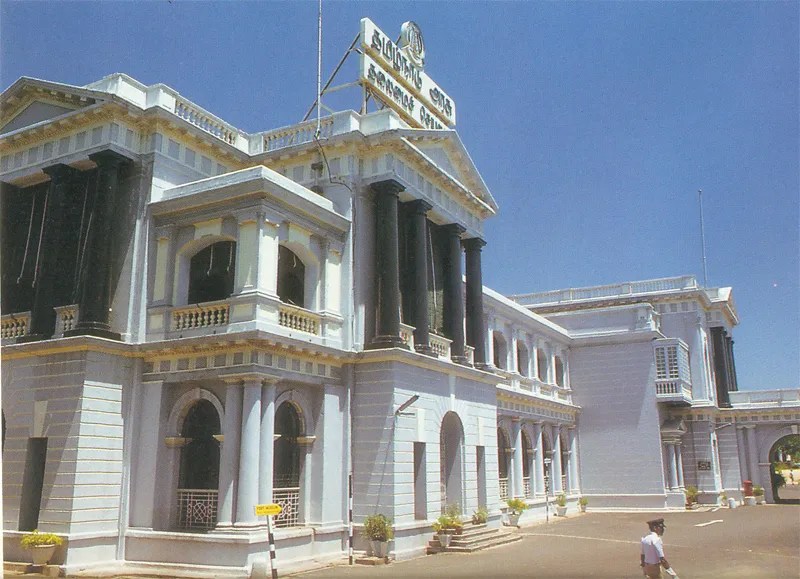
The government moving out does not mean the whole of Fort St. George will become empty. The Army, Navy and Archaeological Survey of India will continue to occupy their respective premises and, in all likelihood, continue their differing approaches to maintaining the precinct. Even if one stakeholder departs, another question arises — will the government truly leave? With its ever-growing departments and ministries constantly seeking additional space, it is unlikely to relinquish valuable property. The present Assembly building, its 1958 annexe and Namakkal Kavignar Maligai together represent assets that the government may prefer to retain.
A Precedent Suggests Continued Government Presence
It is more likely that existing departments will move to the new secretariat while others take their place within Fort St. George. There is already precedent for such an arrangement. During the brief period when the DMK government shifted the Assembly and Secretariat to Omandurar Estate, the former facilities inside the Fort were handed over to the Department of Tamil Studies. Given this history, it seems improbable that the government would simply abandon the premises. The demand for office accommodation remains constant, making continued occupation of these buildings the most likely outcome.
An Opportunity for Tourism and Public Access by Government
Even so, the departure of high-security occupants such as the Chief Minister, ministers and MLAs could make access considerably easier. This presents a valuable opportunity for the Department of Tourism. It could formulate a visitor-friendly plan that transforms Fort St. George into a more vibrant heritage destination. Several spaces remain underutilised and could generate revenue through careful adaptive reuse. Such locations include the King’s Barracks, Parade Square, Casement Barracks, St. Thomas’ Street, the extensive open land behind the Fort and even the Assembly chamber itself.
Unlocking the Potential of Fort St. George
The Department of Tourism could work with stakeholders such as the Army, Navy, Archaeological Survey of India and the Government of Tamil Nadu to restore and activate these spaces. Revenue generated through events and public programmes could be shared among participating agencies. At a time when Chennai is increasingly recognising the value of heritage precincts for contemporary use, Fort St. George offers immense possibilities. Allowing it to remain trapped between competing authorities, inadequate maintenance and limited public access would be a missed opportunity for both the city and its history.
This article appeared in Madras Musings–https://madrasmusings.com/vol-36-no-11/what-next-for-fort-st-george/
My book, Chennai, A Biography can be ordered–https://pastforward.in/cart/