

Spoilers alert This is not a fresh topic, and I have written about it in The Hindu dated March 27, 2012. Last week, however, during a heritage walk tracing the bounds of Chepauk Palace history , I found myself on Victoria Hostel Road, Thiruvallikeni. That meant a visit to The Lodge was a must.
The Lodge and the College of Engineering
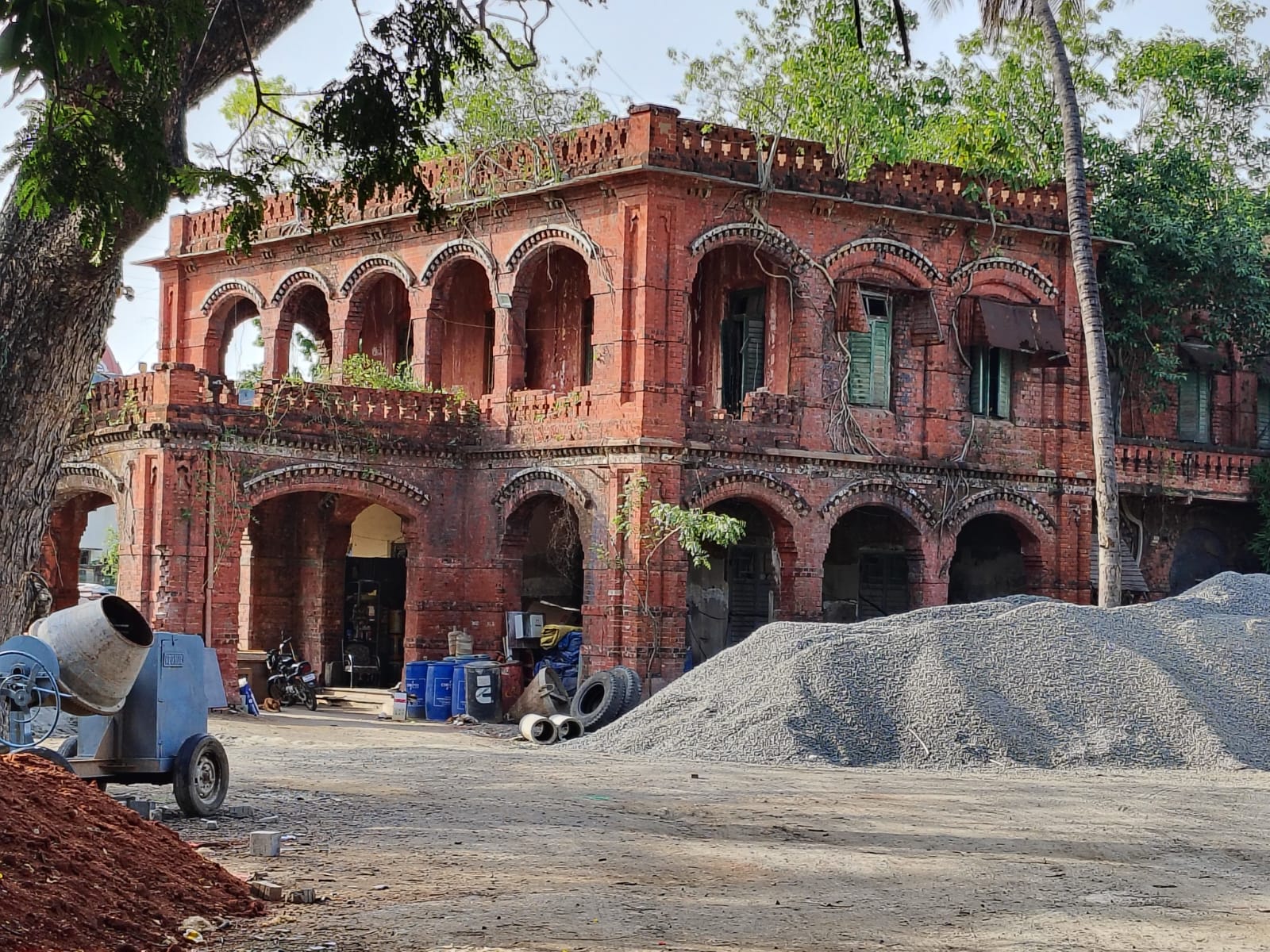
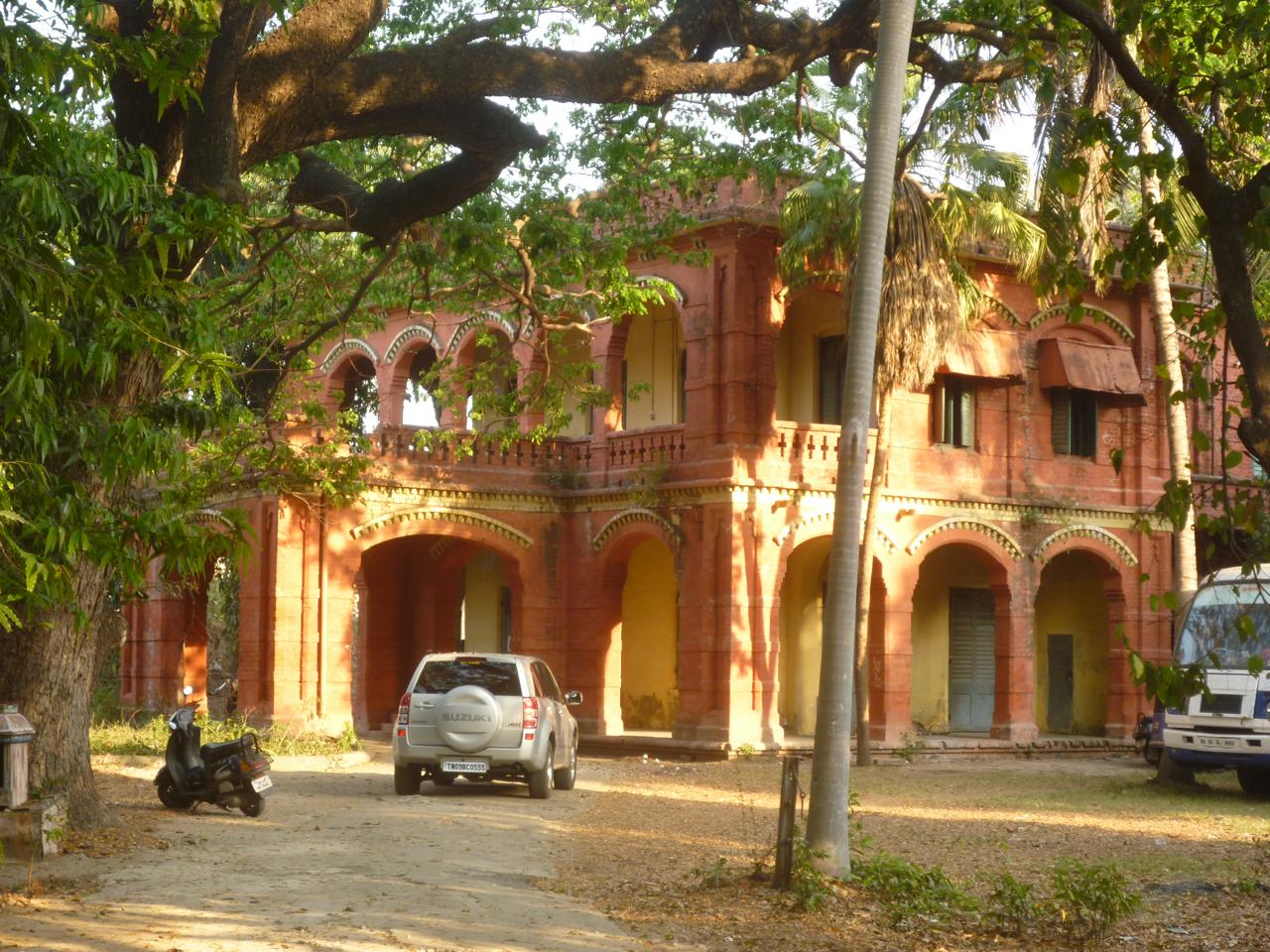
A two-storeyed colonial bungalow, clad in exposed red brick and with a colonnaded verandah running all around it, The Lodge shares a compound with the Victoria Hostel, completed in 1900. The hostel itself was built by T. Namberumal Chetty. The Lodge predates it and bears all the hallmarks of R. F. Chisholm’s design.
During the second half of the nineteenth century, it served as the residence of the Principal of the College of Engineering (now CEG at Guindy), which functioned from Humayun Mahal, one of the wings of Chepauk Palace, until the 1930s.
How Chepauk Palace Changed the City’s History
The topography of the area has changed beyond recognition. Today, the Buckingham Canal divides the Chepauk Palace grounds. Until the 1880s, there was no Victoria Hostel Road, for the palace, spread over 117 acres, stretched from the Marina to Bells Road in Thiruvallikeni. Work on the canal split the property longitudinally. By then, however, the carving up of the Chepauk grounds was already underway. The Nawab’s artillery park was allotted to Presidency College. The saluting battery made way for the Senate House.
The bathing pavilion Hasht Bungalow, or Marine Villa became University buildings. Humayun Mahal housed the College of Engineering, while the western side, which had been the palace’s main entrance, was given to the Madras Cricket Club.
H. D. Love and the Battle for Space
With all these stakeholders in place, there was considerable jockeying for space. Lt. Col. Henry Davison Love was Principal of the College, with breaks in between, from 1880 to the early 1900s. During this period, he lived at The Lodge and was constantly engaged in efforts to expand the space occupied by his college.
He had his eye on the MCC grounds and repeatedly requested portions of them for sports facilities, chiefly cricket and tennis. The MCC was understandably alarmed, particularly as its own boundaries had not yet been clearly defined.
Worse still, once Love began making demands, others followed suit.
The Government Steps In
The Public Works Department wanted land for its officers’ tennis courts. The Archers’ Club was also seeking space. Finally, in 1894, chiefly to protect the MCC, the Government intervened. Love and his beloved engineering college were allotted land to the south for cricket, where the Victoria Hostel would eventually be built.
The PWD received the eastern face of Chepauk now Ezhilagam for its tennis courts, while the archers were granted land alongside.
Where Vestiges of Old Madras Was Written
It was while living at The Lodge that H. D. Love embarked on his magnum opus, Vestiges of Old Madras , completed in London in 1913. Spread across three volumes, with a fourth serving as the index, it remains the principal reference work for the colonial history of our city.
The book is now out of copyright, and a version is available free for download on archive.org. I (preen!) own a first edition that once belonged to the Love family.
A Place of Pilgrimage
For S. Muthiah as well as for me, The Lodge was a place of pilgrimage. Without Love, we would scarcely possess any worthwhile history of our city. Besides Vestiges of Old Madras , he authored several other works—a history of the Madras Club, a compilation of paintings in Banqueting (Rajaji) Hall, and a manual on hydraulics.
His book on Madras, however, remains his best-known work.
The Decline of The Lodge
When my fellow walkers and I visited The Lodge last week, we were shocked by its condition. Victoria Hostel has been a shambles for years, but The Lodge had until recently remained fairly well preserved.
The reason, perhaps, was that it had been rented out for film shoots. Evidently, that phase has come to an end. Trees are now growing out of the building. Windows are falling out. As for the garden, it has become a vast construction site. I assume that new hostel blocks are being built on the land beside Victoria Hostel. If The Lodge is sacrificed in the process, it will be a tremendous loss to the city’s history.
A Case for Restoration
Presidency College owns the property, but the construction work is being undertaken by the Public Works Department. Now that the PWD has a Heritage Cell, which has carried out commendable restoration work on several historic buildings, surely it can also undertake the restoration of The Lodge.
Once restored, it should not become a museum. Instead, it should be put to adaptive reuse. Perhaps one of Presidency College’s departments could be housed there.
What About Victoria Hostel?
As for Victoria Hostel, I cannot help wondering what renovations were carried out there at considerable cost in 2019. When I visited, the building appeared every bit as derelict as before.
This article appeared in The Hindu–https://www.thehindu.com/news/cities/chennai/the-lodge-where-madras-history-was-written/article71221126.ece
My book, Chennai, A Biography can be ordered-http://-http://-http://My book, Chennai, A Biography can be ordered-https://sriramv.com/2021/12/27/how-to-buy-autographed-copies-of-chennai-a-biography-from-outstation/20.ece
