

Reliable sources have it that Fort St George is to soon be freed up of valuable
space, occupied hitherto by unwanted heritage buildings. That these structures were
anyway in various stages of decay is another matter altogether. By the simple
expedient of denying them even basic maintenance, they have been brought to a
state where it is easy to declare them structurally unsound and therefore demolition-
worthy. That the Archaeological Survey of India has a managed to take shelter under
this expedient time and again, and get away with it, is shocking to say the least.
As many as three heritage structures within Fort St George are to be cleared away.
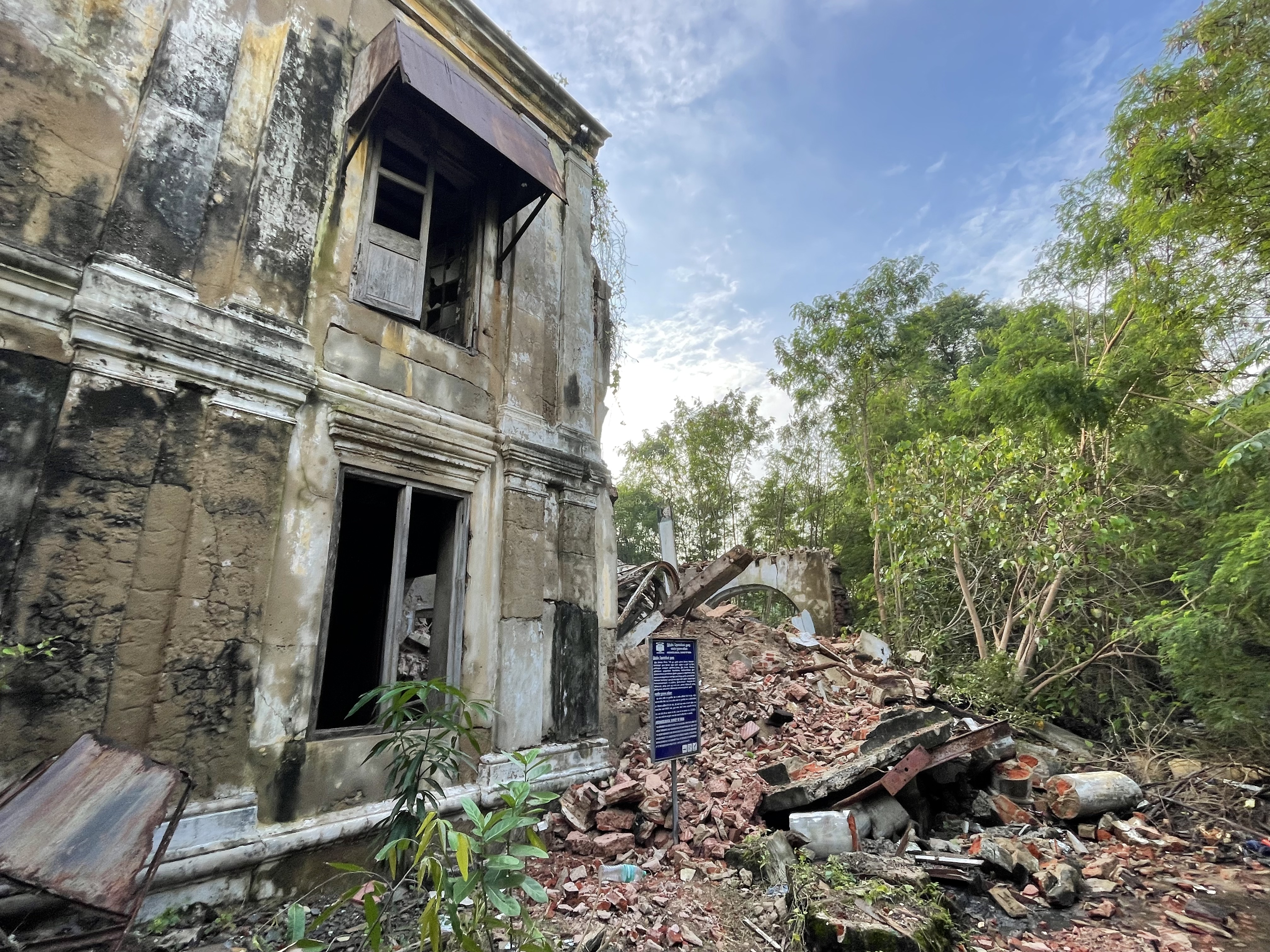
Collapsing Fort St Geo & Buildings.
The biggest is Wellesley’s House, which remains partially standing, a section of it
having collapsed in the early 1990s and allowed to remain as debris, for over 25
years! The second is the so-called Clive’s Library, in the control of the Navy, which
was held in place by a huge tree that grew out of it and which finally collapsed earlier
this year. The third is an un-named barrack, which will apparently be demolished to
make way for a car park. The status of the barrack is unclear but Wellesley’s House
and the Clive Library, were ‘protected monuments’ as per the ASI. It should be noted
here that yet another ‘protected monument’, namely Last House on Snob’s Alley,
collapsed last year.
Denuded Heritage of Fort St George.
There is now a pattern in the way Fort St George is being denuded of its heritage.
The first is to clamp down on maintenance, barring the showpieces namely the
Assemby and Secretariat, the Church of St Mary’s, the ASI headquarters, For
Museum, and a couple of buildings belonging to the army and navy. The rest rapidly
go to seed and then are demolished. This was exactly how an entire area, namely
Portuguese Square was done away with in the 1980s to make way for the Namakkal
Kavignar Maligai. Then Post Office Square, which was at the end of St Thomas’
Street, and which was perfectly clear of vegetation till the late 1990s was allowed to
go to seed leading to the collapse of the Parson’s House and also much later, Last
House. The flagstaff was cut into pieces and replaced by a steel mast and nobody
knows where the remnants of the old one are. And in between we had the collapse
of Wellesley’s House. Going by this, historic King’s Barracks is next in line given its
state of maintenance.
Role of ASI in the Denudation of Fort St George.
That the ASI should choose to remain silent and watch all this happen is truly
shocking. Surely its officials ought to be making a hue and cry about these
developments and demanding funding for maintenance? And on what basis do they
declare a building as being suitable for denotification? This procedure seems to be
wrapped in masonic secrecy and smacks of complete complicity with the other
bigger and vested interests in the fort. A few months ago, it was reliably learnt that
the Army was being pressured by the ASI to handover the buildings in their
possession to it but they were resisting chiefly because they were concerned that the
ASI would immediately denotify these structures and allow their demolition.
Fort St George, for all that it is a historic precinct and one that has been the seat of
governance for three centuries, is not treated that way. The place is full of mounds of
garbage, lacks basic amenities and wild vegetation, apart from places that see
pedestrian and vehicular traffic. It is an apology for a heritage complex. And soon,
we will have fewer markers left to show up its historicity.
This article appeared in Madras Musings dated Dec 16 – 31, 2024 – CLICK HERE to read this.