


These days I am addicted to reading the diaries of Dubash Ananda Ranga Pillai. We celebrate Samuel Pepys as the greatest diarist of the 17th century. I would rank Pillai as the greatest a century later. His writings deal with the Coromandel Coast and therefore are more relatable. The Carnatic wars for instance are as dramatic as the Great Fire of London. And while much of what Pillai writes centres on Pondicherry, Madras being the rival town, is not far behind.
The Power of the Dubash
The Tamil is not easy for Pillai uses words that have long gone out of fashion. And there are thousands of routine matters you need to wade through before you hit that occasional gem which makes all the effort worthwhile. One of my learnings was the sheer volume of Indians that were in the employment of the European traders.
And that brings me to the term Dubash – those wily translators who operated as go-betweens for vital negotiations and battened in the process. Was everyone a Dubash? That this was not so is very clear from Pillai’s writings on both Pondicherry and Madras. There were all kinds of openings available and only a select few made it to being Dubash. Each European of note and his wife had one in their personal service and the Dubash attached to the mem was often more powerful than his counterpart with the husband. The Company itself had a Dubash and the establishment, by which I mean the Town and Fort, had a Chief Dubash to whom the most sensitive of negotiations were entrusted. Thus Pillai we find dealt with the Nawabs of Arcot, the Nizams of Hyderabad and several lesser chieftains, all of whom he knew personally and from whom he received rewards.
Parish Venkatachala – Head Dubash in Madras
His equivalent in Madras was clearly Parish Venkatachala Iyer, after whom there is a street even today in George Town. Pillai refers to him as the Chief Rayasam of Madras. The Governor of the time, namely Nicholas Morse had a Dubash named Lakshmana Mudali of whom we do not know much but there is a street commemorating him in the Korattur area. But what also emerges from the diaries is a series of names that were not dubashes.
Sembudoss, of Sembudoss Street – Not a Dubash
Take for instance Sembudoss, who is identified as the son of Shankar Parikh and therefore must have been a Gujarati. He was clearly a merchant and an important one at that. There were similarly accounts keepers, warehouses in-charge, mint masters, ship chandlers, horse agents and of course cloth and cotton dealers who were important for the fundamental trade to keep happening. These are not identified as Dubashes.
The Shroffs of Madras
Ananda Ranga Pillai also dwells on the power of the money lenders in Madras and Pondicherry. In an era where shipping was very risky and a lot was lost at sea, the French and the British East India Companies seem to have relied on many borrowings to pay their vendors. And these men too, though not part of the company structure were important in their own right. Dupleix keeps asking Pillai to get the Madras shroffs to shift to Pondicherry but they clearly felt the British were a better bet. They were correct of course. In fact, I would say Pillai secretly yearns to become a Dubash of Madras, the city he describes as the centre of all wealth. His desire would never be fulfilled.
I realised after completing the first three volumes (there are 12 in the edition I am reading) that there was a lot more to serving the Europeans than just being Dubashes. More as I read further.
This article appeared in The Hindu dated September 25, 2024 and can be read here
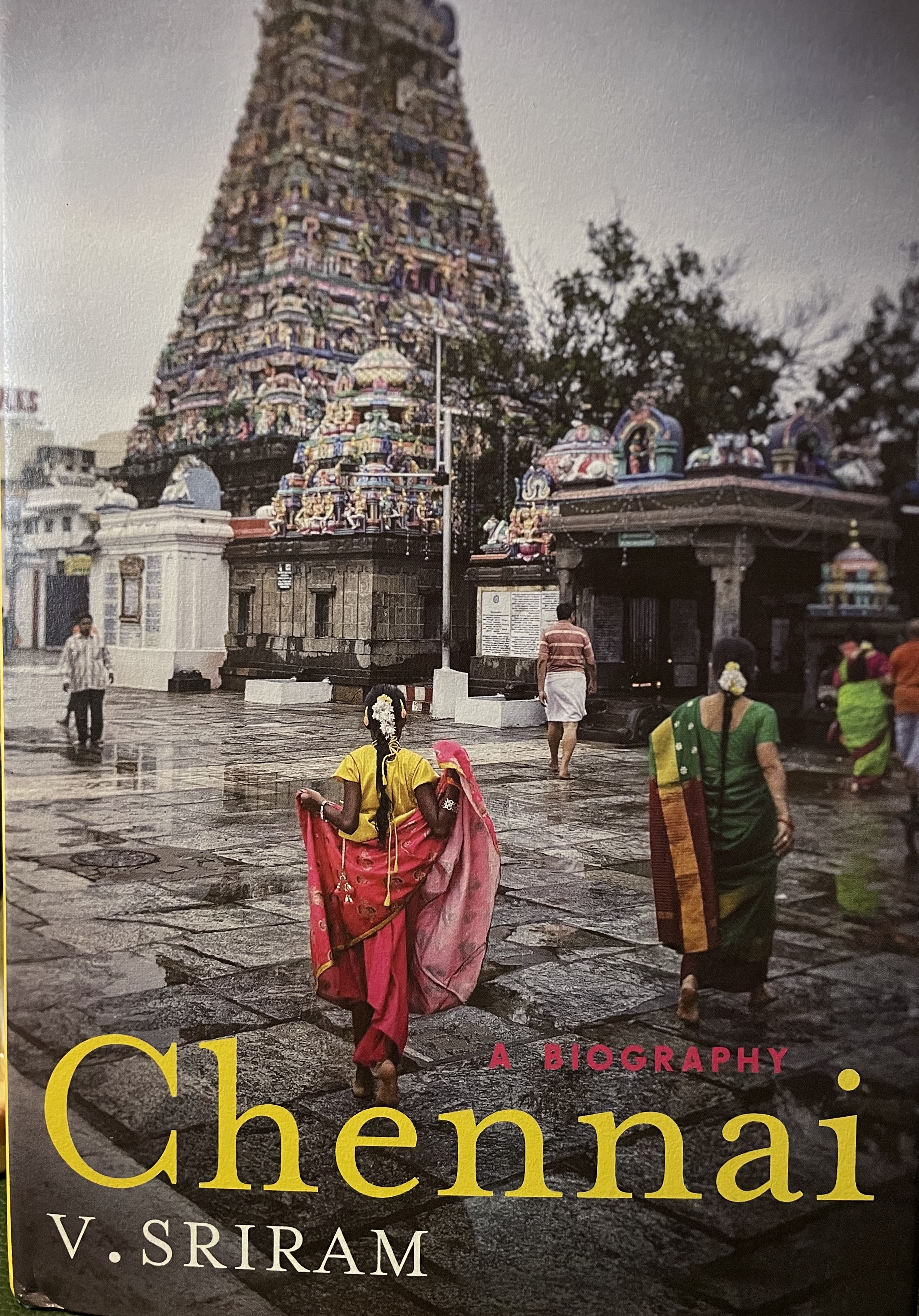
The book can be ordered here