

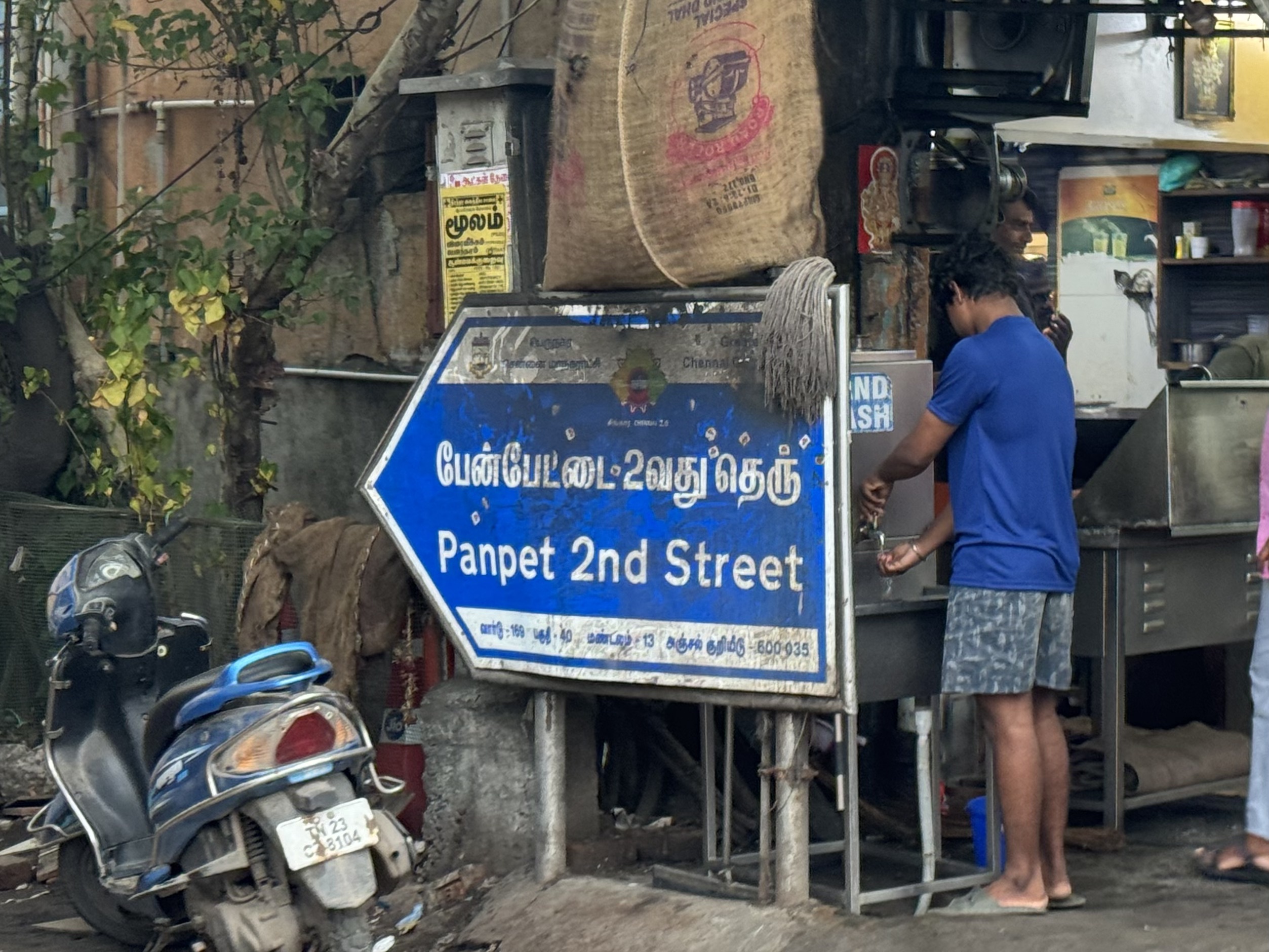
While waiting at a traffic light this signboard caught my attention. Panpet is in Saidapet. The name is mutilated beyond recognition from its original Fanepet but it serves as a reminder of when Chengalpattu was one of the most important districts of Madras Presidency.
Chengalpattu as a source of revenue
To the East India Company, while Madras was the administrative capital, neighbouring, or more aptly surrounding, Chengalpattu was important as a source of revenue. Obtaining the rights to the jaghir of Chingleput was one of the key objectives of every early Governor of Madras. The region was full of waterbodies and therefore fertile. Farming there was seen as a most lucrative activity. Unfortunately, the incessant wars of the 17th century had rendered much of that area barren, but this could be rectified with some careful management.
The Company becomes Jagirdar of Chengalpattu
The Company saw its dream come true by the 1750s though it took until 1788 when all necessary approvals from the Nawab of Arcot, the Nizam at Golconda and the Mughal Emperor in Delhi could be obtained. The Jaghir comprised the districts of Chennai/Madras, Kancheepuram, Vellore, Tiruvallur and Tiruvannamalai Districts. Thereafter with the city of Chennai becoming an administrative entity of its own, Chengalpattu District came to be divided into ten taluks – Karunguzhi, Uthiramerur, Kanchipuram, Manimangalam, Chengalpattu, Tirupporur, Saidapet, Poonamalle, Peddapalayam and Sathiyavedu, and Nayar.
The District HQ for Chengalpattu
Karunguzhi was the district headquarters except for a period of ten years between 1825 and 1835 when Kanchipuram fulfilled that role. In 1859/60, the British brought down the number of taluks to six, while not changing the overall district size, and reassigned Saidapet as the new district headquarters. The new taluks were Saidapet, Tiruvallur, Kanchipuram, Ponneri, Chengalpattu and Madhurantakam. This arrangement remained more or less unchanged until 1949/1950 when Saidapet became a part of Madras city and Chengalpattu town became the headquarters of the remaining district.
Vestiges of Chengalpattu in Saidapet
The collectorate of Chengalpattu was on the southern bank of the Adyar river, on the right side as you approached via the Marmalong (now Maraimalai Adigal) Bridge. The supremely ugly Panagal Buildings stands on the site where there was a beautiful colonial building till the 1990s, full of stained glass and statuary. This is why the connecting thoroughfare to Guindy is even now known as Taluk Office Road. The district court, now the Saidapet Magistrates Court, a handsome Indo-Saracenic building, happily survives and is still in use.
EGR Fane as Collector of Chengalpattu
To be appointed Collector of Chengalpattu was a major step up in the civil services during Company and Raj rule. It indicated that you were well on your way to becoming Chief Secretary or Member, Revenue Board. EGR Fane was one such. He appears to have joined the Madras Civil Service in the 1840s, beginning as Head Assistant to the Collector and Magistrate of Madurai. From then on, he was posted at various places and in the early 1860s was Collector of Chengalpattu.
Planting of Casuarina Trees Along ‘ECR’
His principal contribution in today’s terms is the vast tract of casuarina trees that we see on the ECR as we drive towards Mamallapuram. In a letter dated Sept 13, 1865 he writes as much, adding that the wood was perennially in demand in the city. He also seems to have been interested in Kodukkapuli (Madras thorn) tree cultivation. Becoming Collector of Madras a couple of years later, he became a Member of the BOR in 1869. He resigned from service in 1870 and disappears from records thereafter.
From Fanepet to Panpet
Interestingly, the area named after him appears as Fanepet even as late as in 1974. In the 1990s it had become Pernpet and is now Panpet. The Tamil spelling, which is closer to the original, makes it the locality of lice.
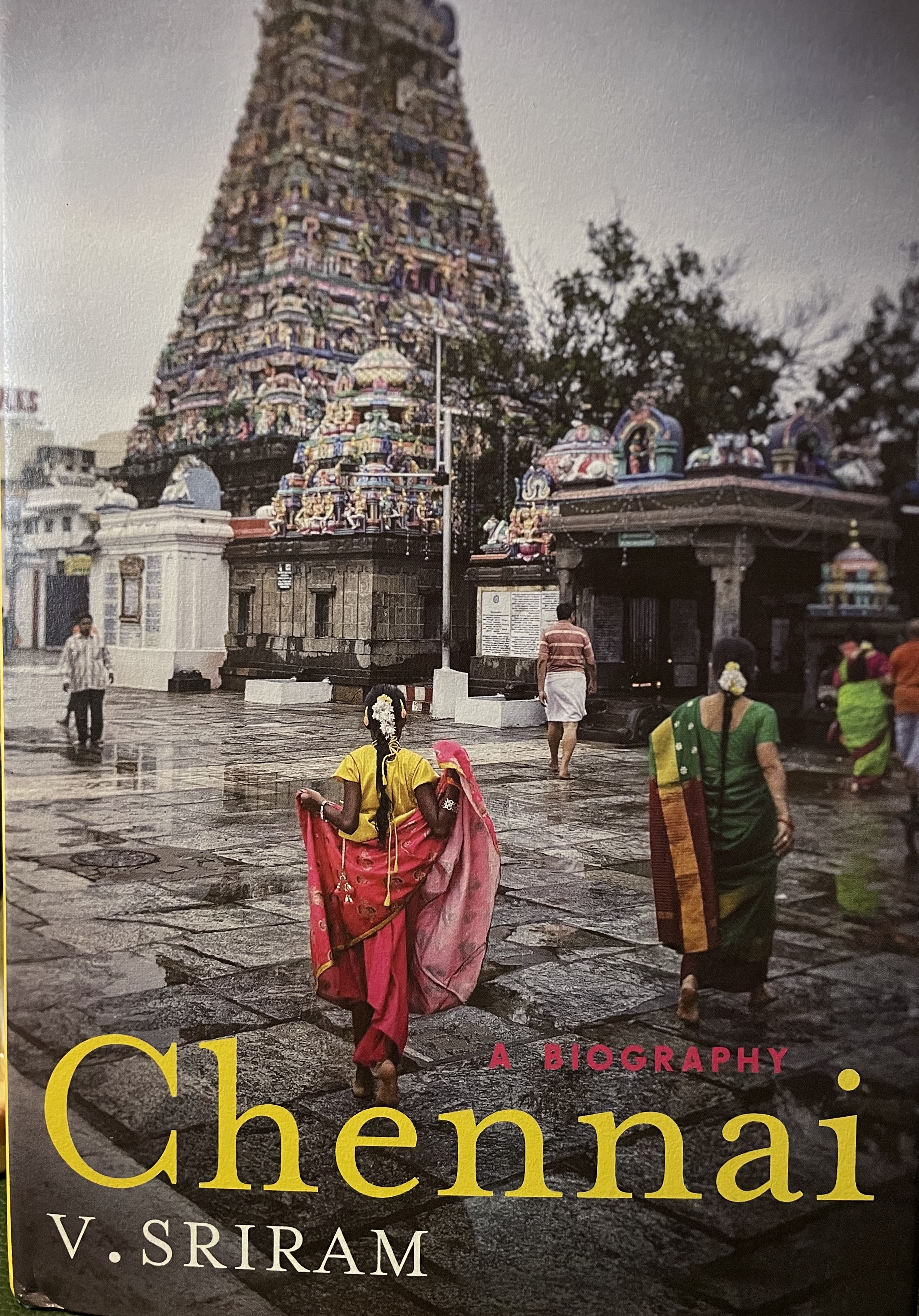
My book, Chennai, A Biography, can be ordered here–
This article appeared in The Hindu dated August 7, 2024