

Etching names in stone – a pastime even in the past
One of the biggest challenges that our historical structures face is graffiti. The tendency is universal but in India it seems more so, given that much of our built heritage is still in use. And that which is not, suffers from appalling neglect if left in the open. Which is probably why the Archaeological Survey of India keeps many of its sites securely locked and makes it a challenge to get permission to have them opened. But scribbling, or worse, chiselling/carving names on historic monuments continues regardless and sets your teeth on edge when you come across them.
Some vintage examples over the centuries
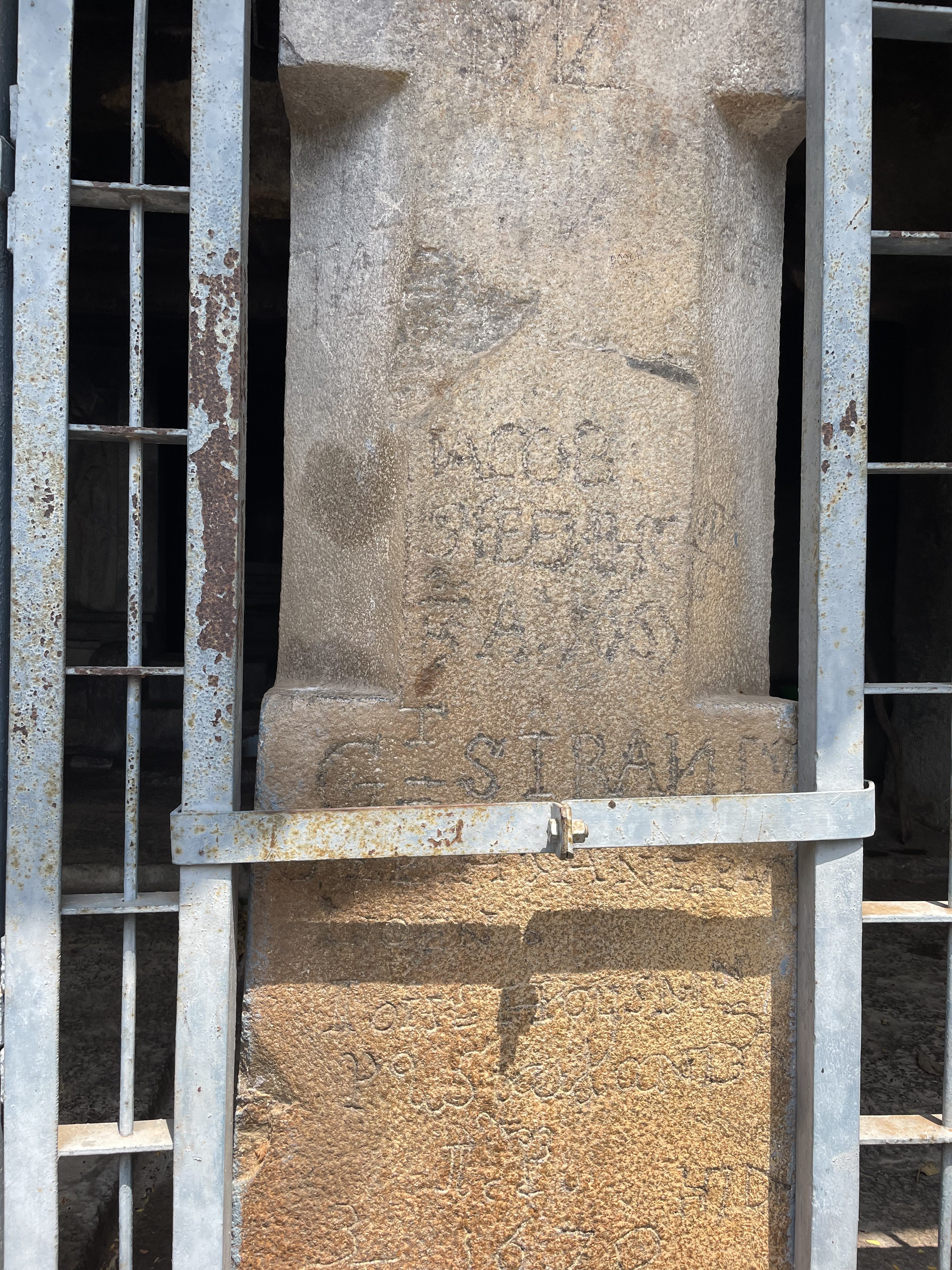
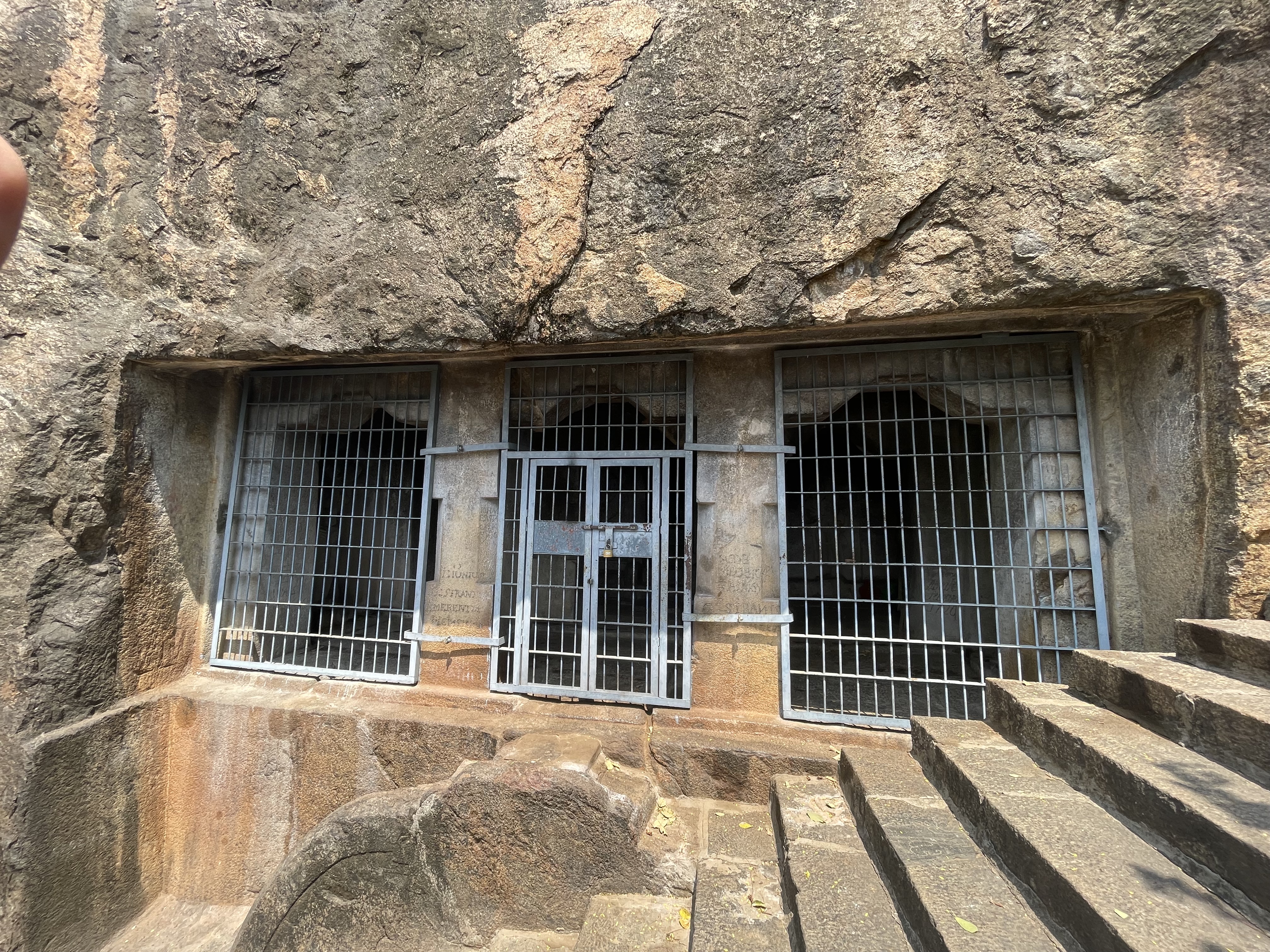
But what happens when graffiti is of a venerable age? Such as when a Hoysala chieftain at Thirumayam in Pudukottai has his judgement on a dispute placed on top of a pre-existing Pallava inscription on music? Or when an Englishman upon accidentally discovering Ajanta, chose to carve his name on a fresco? Or closer home, when a set of Dutch visitors in the 17th century decided to inscribe their names for posterity on the pillars of a Pallava era cave? The last had me pondering when I came upon what seemed patently Western graffiti inscriptions at the Narasimhavarman cave shrine on the way down from the Thirukazhukundram hill.
The discerning Dutch in Thirukazhukundram
This historic spot is just outside city limits – only just, for Chennai in its next expansion is bound to absorb this scenic village into itself. There are two important temples here – the sprawling Bhaktavatsalesvara shrine at the base of the hill and the tiny but more historic temple to Vedagirisvara at the summit. Hallowed in Tevaram hymns and later verses, it also represents a continuous historic record from Pallava times to the present. Besides these, there is on the pathway down the hill a cave shrine, dating to the reign of Narasimhavarman in the 7th century. There are inscriptions here praising the ruler.
1000 years after him came the Dutch. They had extensive trading interests in the region in the 17th century, with a chain of outposts beginning in Andhra and extending all the way down the coast to Nagapattinam. One of these was Sadras, which is very close to Thirukazhukundram. It would seem that the latter village was a picnic spot for the Dutch or a convenient halt en route their travels between their various trading locations. And many of those who came, decided to carve their names on the pillars of the cave. And below each name there is also the year of their visit.
Research behind Dutch graffiti
The full visitors’ list was deciphered by the Madras Government Epigraphist between 1908 and 1909. There are 23 of them, which includes women. And they visited between 1664 and 1687. That was the Dutch heyday in the region, before the English and the French gradually edged them out. PV Jagadisa Ayyar in his South Indian Shrines (The Madras Times Publishing Co, 1920) has identified most of the people behind the names. Several of these were Dutch Governors of the Coromandel and Ayyar speculates that “the summit of the hill commanding from its height a fine view of the plain below, right up to seashore at Mahabalipuram, must have attracted the attention of the Dutch factors.”
Despite the heat haze that enveloped the area, I did manage a good view of the temple at the base but of Mamallapuram I could see nothing. The throng of worshippers of course was more interested in the painted replicas of the kites that are supposed to have been regular visitors to the temple each afternoon for decades. The birds have not been sighted in quite a while now.
This Article appeared in The Hindu on 8th May
To buy autographed copies of Chennai – A Biography, click here
Follow Us on Social Media Platforms :
Instagram : https://www.instagram.com/originalmadrasmobile/
Twitter : https://twitter.com/MadrasMobile
YouTube : https://www.youtube.com/c/SriramV
It is interesting to learn about Dutch graffiti. I visited this temple in March 2024 and noticed such graffiti near the two dwarapalakas, too.