


In the past few months, I have been reading the biography of Justice S Natarajan.
The High Court of Madras is a singularly fortunate institution in that it has two volumes that document its history. The first is A Century Completed, written in1962 by VC Gopalratnam, a leading lawyer. This was to commemorate the centenary of the High Court, and it was done in express speed to meet two deadlines. The first was Gopalratnam’s failing health and the second was the centenary celebration. The then Chief Justice, S Ramachandra Aiyar, had attended the Bombay High Court’s centenary, received a copy of its book, and wanted a similar one in time for the 100th anniversary in Madras. The second book, written by senior advocate NL Rajah, and titled The Madras High Court, a 150-year Journey from a Crown Court to a People’s Court, was released in 2012 to commemorate 150 years. It is an excellent work.
Justice Natarajan and his reminiscences
Despite both, I always feel that a comprehensive record of such an institution is an impossibility – there is something happening there on a daily basis, practically every minute, and it involves hundreds of people in its functioning and its impact is felt nation-wide when it comes to judgements. Thus, important gaps are filled in when lawyers and judges pen their reminiscences. One such book, which I read with much joy recently, was Justice S Natarajan’s autobiography. The book, titled Family History and Rambling Reminiscences, was written by him towards the end of his life and privately published. The family wanted an annotated version to be ready in time for his centenary and I helped with the task. Perusing the volume, I found it to be anything but rambling.
A Life in Law
Born on October 29, 1924, Natarajan was from an aristocratic Mudaliar family of Salem. He wanted to pursue medicine but his taking a wrong combination of subjects in his pre-university course led to him to study at the Madras Christian College and later at the Law College. He enrolled at the Madras High Court on August 8, 1947, and later practised at Salem. Opting for a career in the judiciary, he obtained appointment as a District and Sessions Judge in 1965, functioning in that capacity at Coimbatore. In 1969, he became the Chief Presidency Magistrate, Madras. In 1973, he was elevated to the Bench, becoming first Additional Judge and a year later Judge of the High Court of Madras. He was made a Judge of the Supreme Court of India in 1986, from where he retired three years later.
Sharp Pen Portraits
The book is made interesting by the sharp pen portraits that Justice Natarajan gives of his family members, in particular his father-in-law, Sir PT Rajan, one of the pillars of the erstwhile Justice Party. He also writes in detail about some of his colleagues who were luminaries – Chief Justices Veeraswamy and Rama Prasad Rao and Justice MM Ismail in particular. There are also several interesting passages on life as a student of the Law College during WW II. The quirky aspects of becoming a Judge are not overlooked -did you know that Judges of the High Court did not get Government accommodation till the 1990s and that none other than the CJ was allowed an official car? Some of his landmark judgements too feature.
Centenary of Justice S Natarajan
Though the 100th birth anniversary fell on October 29th, Justice Natarajan’s sons organised an event on November 16th at the Kalaivanar Arangam on that day, with Justice BV Nagarathna, Judge, Supreme Court of India being Chief Guest and Justice P Sathasivam, former Chief Justice of India presiding.
This article appeared originally in The Hindu dated November 13, 2024 and can be read here. It is published here with some changes.
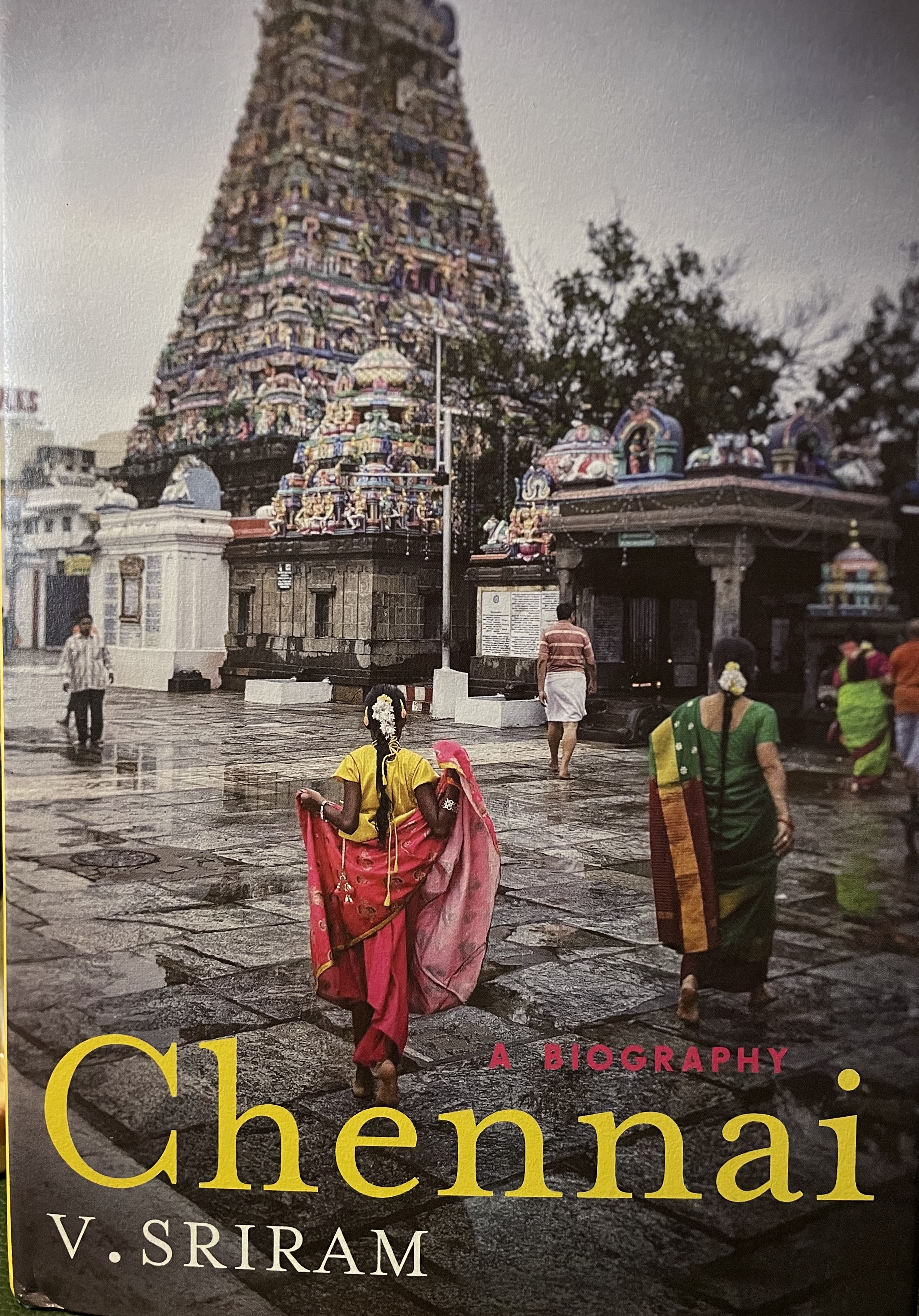
My book on Chennai can be ordered here